
Excelsa coffee comes from Coffea dewevrei, a rare coffee tree from central Africa that is neither Arabica nor Robusta. It tastes tart and fruity, with notes of dark fruit, chocolate and spice, little bitterness and caffeine close to Arabica’s. For decades botanists classed it as a variety of Liberica, but a 2025 genetic study by scientists at the Royal Botanic Gardens, Kew, confirmed it is a separate species. Excelsa is tough: it copes with heat and long dry spells better than Robusta, which is why farmers and researchers see it as a possible climate-resilient coffee. It is still very rare, a tiny fraction of 1% of the world’s coffee, grown mainly in Vietnam, the Philippines, Indonesia, India, Uganda and South Sudan.
| Excelsa | Liberica | Arabica | Robusta | |
|---|---|---|---|---|
| Species | Coffea dewevrei | Coffea liberica | Coffea arabica | Coffea canephora |
| Flavor | Tart fruit, dark fruit, chocolate, spice; little bitterness | Smoky, woody, jackfruit-like, sometimes floral | Sweet, complex, fruity, floral | Strong, bitter, earthy, nutty |
| Caffeine | Close to Arabica | About the same as Arabica | About 1.2 to 1.5% | About 2.2 to 2.7% |
| Beans | Smaller than Liberica, thin parchment | Large, uneven, almond-shaped | Oval, medium | Small, round |
| Climate | Hot lowlands; tolerates heat and drought | Hot, wet lowlands | Mild highlands | Hot, humid lowlands |
| Share of world coffee | Together, a tiny fraction of 1% | A little over half | Roughly 45% | |
Caffeine and flavor vary by farm and processing. Sources: Royal Botanic Gardens, Kew study in Nature Plants (2025), Specialty Coffee Association, USDA.
What Is Excelsa Coffee?
Excelsa grows wild in the forests of central Africa, from Cameroon and the Republic of the Congo to the Central African Republic, South Sudan and Uganda. The French botanist Auguste Chevalier described it in the early 1900s as Coffea excelsa, a name that means “lofty” in Latin. In 2006 it was folded into Coffea liberica as the variety dewevrei, which is why many guides, including ours on Liberica coffee, still call it a type of Liberica. In 2025, a genetic study led by Kew coffee scientist Aaron Davis and published in Nature Plants split Liberica into three species and recognized Excelsa as its own species, Coffea dewevrei. You will still see it sold simply as “Excelsa.”
Excelsa trees are large and vigorous, with deep roots, thick leathery leaves and strong trunks, and farmers prune them to keep the cherries within reach. Under good conditions they yield more than Liberica, and the beans are smaller, with a thinner parchment. Excelsa also has useful resistance to some common pests and diseases, though it is not immune: coffee wilt disease wiped out plantations in the Central African Republic in the 1940s.
What Does Excelsa Coffee Taste Like?
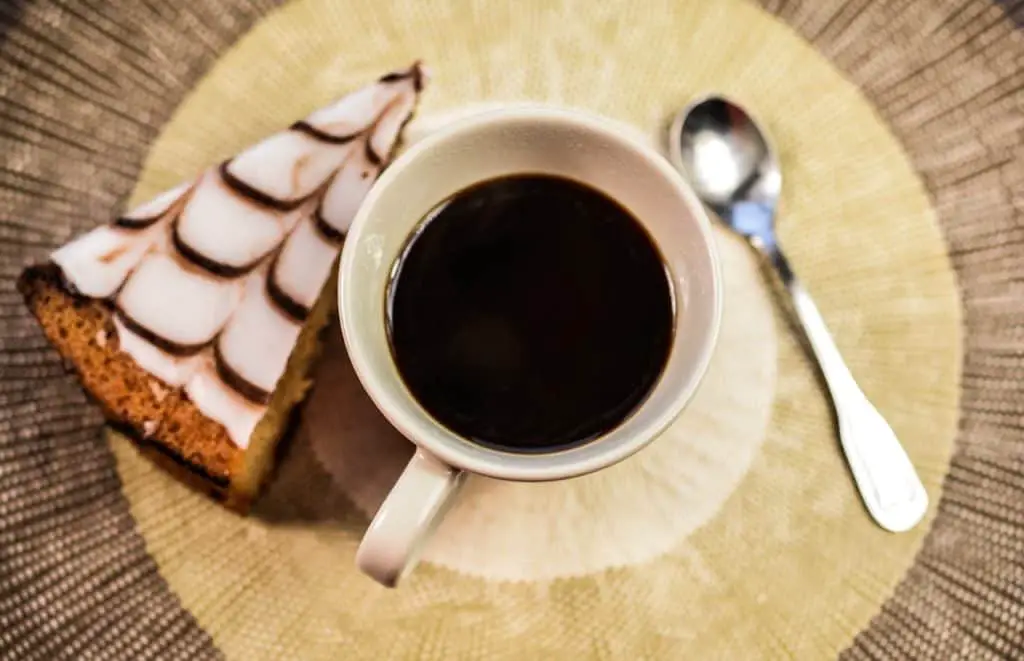
Well-grown, well-processed Excelsa is sweet and tart, with dark fruit, tart berry and tropical notes, chocolate, hazelnut and a touch of spice. It has medium body and acidity and much less bitterness than Robusta, so it can be enjoyed black. Lower-quality lots can taste woody or fermented, and some have the ripe, jackfruit-like aroma also found in Liberica. Many roasters blend Excelsa with Arabica or Robusta to add fruit and depth, but more and more sell it as a single origin.
- Roast: a light to medium roast keeps the tart fruit; a medium-dark roast brings out chocolate and spice. See coffee roast levels.
- Brewing: pour-over shows off the fruit, while a French press or moka pot emphasizes body and chocolate. Start with a standard 1:16 ratio for filter coffee.
- Caffeine: Excelsa’s caffeine is close to Arabica’s and well below Robusta’s, so it is a good choice if you want a fruity cup without an extra jolt.
Where Is Excelsa Grown?
- Southeast Asia: Vietnam, where Excelsa and Liberica are known as cà phê mít (“jackfruit coffee”) and are often grown alongside Robusta; the Philippines, mostly for local drinking; and Indonesia, including Java. See coffee in Vietnam.
- India: where plantings are increasing.
- Africa: Uganda and South Sudan, where Excelsa grows wild and new farms are being planted, as well as Guinea. In 2025, South Sudan prepared its first small export batch, about 7 tons, for specialty buyers in Europe.
- The Americas: small new plantings, including in Nicaragua, linked to Excelsa specialty brands in the United States.
Total production is tiny. The often-repeated claim that Liberica and Excelsa make up 1 to 2% of world coffee comes from 19th-century figures; the 2025 Kew study estimates current production at probably under 1,000 tonnes, around 0.01% of global coffee exports.
Why Excelsa Matters: Coffee and Climate Change
Arabica needs cool, mild highlands, and Robusta suffers in long droughts and extreme heat. Climate change is shrinking the land suited to both. Excelsa can produce commercial crops at higher temperatures and through longer dry periods than Robusta, and it grows in hot lowlands from about 500 to 1,000 meters. Researchers are now studying it, along with Liberica, as a way to keep coffee farming viable in places that are becoming too hot for today’s crops. Read more about Arabica vs Robusta and why the industry depends so heavily on two species.
How to Buy Excelsa Coffee
- Look for the species on the label. Specialty Excelsa is usually sold as a single origin with the country and farm named. Check our guide to coffee bag labels.
- Check the processing. Natural, honey and experimental anaerobic Excelsas push the fruit further; washed lots taste cleaner. See coffee processing methods.
- Buy whole bean from a roaster with a recent roast date, and expect to pay more than for everyday coffee because supply is so small.
Former roastery owner and coffee tour operator. Steve spent five years roasting coffee for his own shop and wholesale customers. More about Steve